

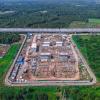
The Solar Irrigation Lifting System in Dochhukha-Dzomlingthang-Ritsa Chiwog, under Guma Gewog in Punakha, sustained partial damage in the flash flood. The system has stopped functioning, although the full extent of the damage is yet to be assessed.
The flood also swept debris onto a section of the Punakha-Gasa Highway in the Dzomlingthang area. The information was shared by the Tshogpa, the government representative of Dochhukha-Dzomlingthang-Ritsa village.
The glacial lake outburst was reported on Thursday evening at Shintaphu Lake, also known as Shintaphu Tsho, located below Wakila Mountain in Bhutan's Gasa district. The lake is situated in the upper reaches of the Mo Chhu river basin. When its water overflows, it drains southwards into the Mo Chhu, potentially triggering a surge downstream.
Shintaphu Lake is among Bhutan's 17 potentially dangerous glacial lakes. An official from the National Centre for Hydrology and Meteorology (NCHM) said a water-level monitoring station was located at Taktsimakhang. However, no alert had been triggered at the station when the initial reports emerged. The full extent of the outburst and its impact downstream remain unclear.
A glacial lake outburst flood occurs when water stored in a lake formed by melting glaciers is suddenly released, usually after the natural barrier holding the water fails or is breached. The resulting surge can move rapidly through mountain valleys, carrying large quantities of debris and damaging settlements, roads, bridges and agricultural land.
Shintaphu Lake lies within Bhutan's Punatsangchhu river basin. The river is known as the Sankosh after entering India, making any sudden release of water a potential concern for downstream communities.
Following the outburst, the Government of India issued a special advisory warning of a possible sharp rise in water levels along the Sankosh River. Authorities cautioned that a flash flood in the upper reaches of the Punatsangchhu River could cause a sudden increase in water levels in West Bengal's Alipurduar district and Assam's Dhubri district.
Flood alerts were also issued across parts of North Bengal, including the Darjeeling hills, Jalpaiguri and Cooch Behar districts.
National Disaster Response Force (NDRF) and State Disaster Response Force (SDRF) teams were deployed in Tufanganj and Boxirhat in Cooch Behar district. Both locations are situated along the Sankosh River, near the Assam border. Residents were alerted about the possible threat.
According to the advisory, floodwater was expected to reach the India-Bhutan border within six to eight hours. Authorities in the affected districts were directed to closely monitor the situation and take precautionary measures.
West Bengal Forest Minister and Kumargram MLA Manoj Kumar Oraon appealed to people living along the Sankosh River in Alipurduar district to move to safer locations.
In a video message posted on Facebook, Oraon warned that a surge of water could reach the river in Kumargram within the next one to one-and-a-half hours. He urged residents to evacuate as a precaution and cooperate with the administration.
BJP MP from Darjeeling Raju Bista also issued a public safety alert for people living along the Sankosh River.
In a post on X, Bista said a GLOF had been reported at Lemthang in Bhutan. He stated that the overflowing water was moving downstream through the Mofu River towards the Sunkosh River. He urged people living in the catchment areas of the Sunkosh and its connected tributaries to immediately move to safer locations.
"Everyone in our Darjeeling hills, Terai and Dooars region are requested to stay alert," he added.
The Sankosh flows from Bhutan into India and supports communities across parts of northern West Bengal and adjoining Assam. A sudden rise in its water level could threaten riverside settlements, livestock, farmland and infrastructure.
Meanwhile, the flash flood transition period has passed, and all residents in the affected Indian areas, including districts in West Bengal and Assam, have been reported safe. People living in vulnerable locations were shifted to relief shelters as a precaution.
Alipurduar Superintendent of Police Amit Kumar Shaw said the situation was under control and appealed to residents not to panic.
"First of all, I would like to tell the residents of the district that there is absolutely no need to panic. The situation is currently under control. We are in constant touch with the authorities in Bhutan," he told news agency ANI.
Shaw said the police, district administration and other agencies were working in close coordination. SDRF personnel had been deployed, while an NDRF team was also on its way. A Civil Defence team was assisting with the preparations.
"We have already moved approximately 4,000 to 5,000 people into shelters, utilising school buildings as relief centres. Additionally, more than 6,000 people have been relocated to safe areas," he said.
According to the SP, the intensity of the water flow had decreased slightly, based on the latest information received from Bhutan. However, the administration continued to remain on high alert.
"The police, the DM's office, and the BDO's office have made arrangements for dry food and drinking water. We have also ensured that other necessities, such as toilet facilities, are provided," he said.
Shaw added that a red alert remained in effect for the Sankosh river system. He also cautioned that the water flowing through the river could carry dead fish and large pieces of wood and concrete debris.
According to details shared by the Kumargram block administration, residents were relocated to 18 flood shelters across the block. These included schools, community halls, religious institutions and tea garden facilities.
With the initial flood transition period having passed and residents in the affected Indian areas reported safe, authorities continue to monitor the Sankosh river system. The extent of the downstream impact remains a key concern, particularly for communities living along the river and its connected tributaries.
About The Author








Comment List